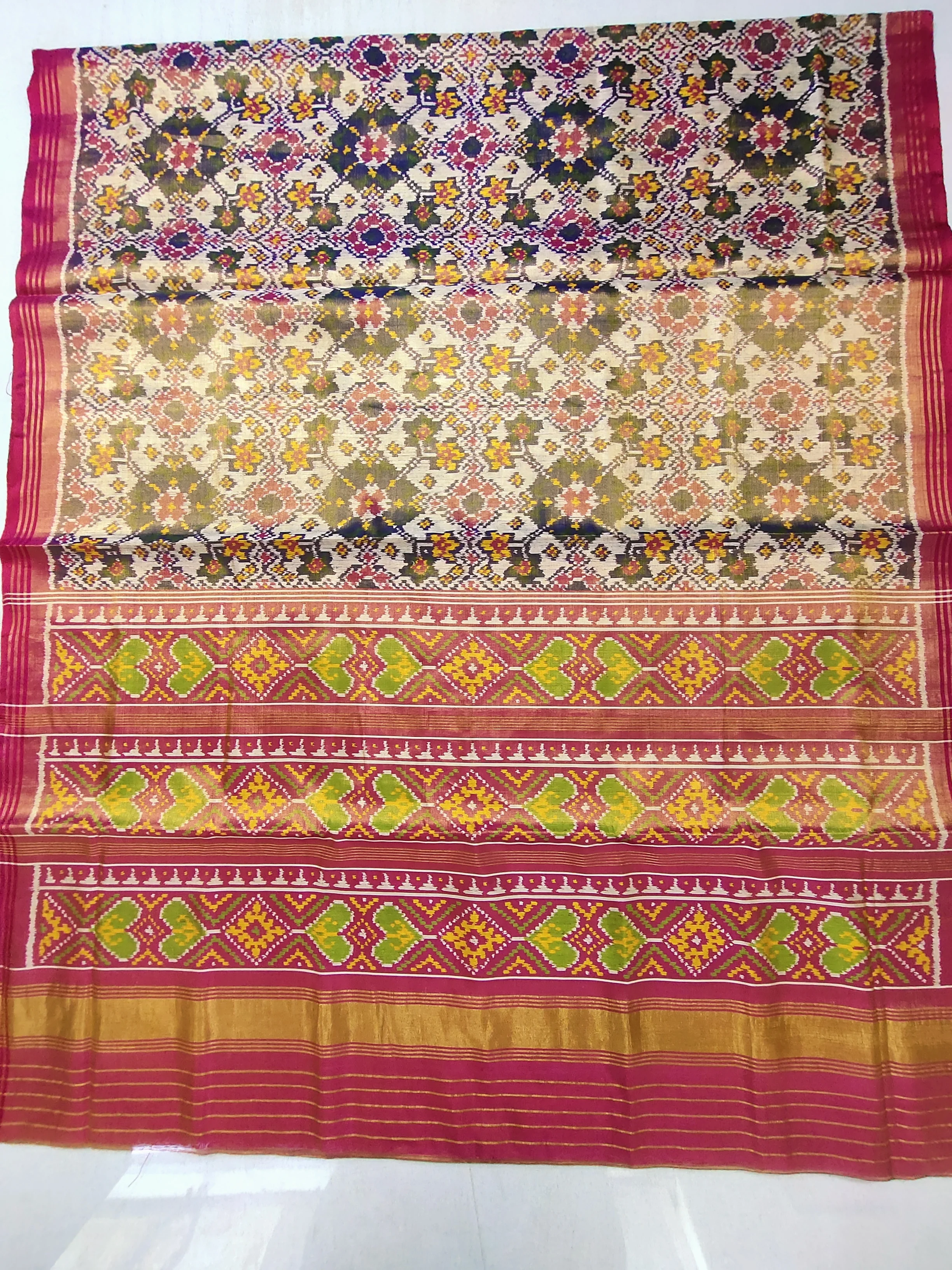
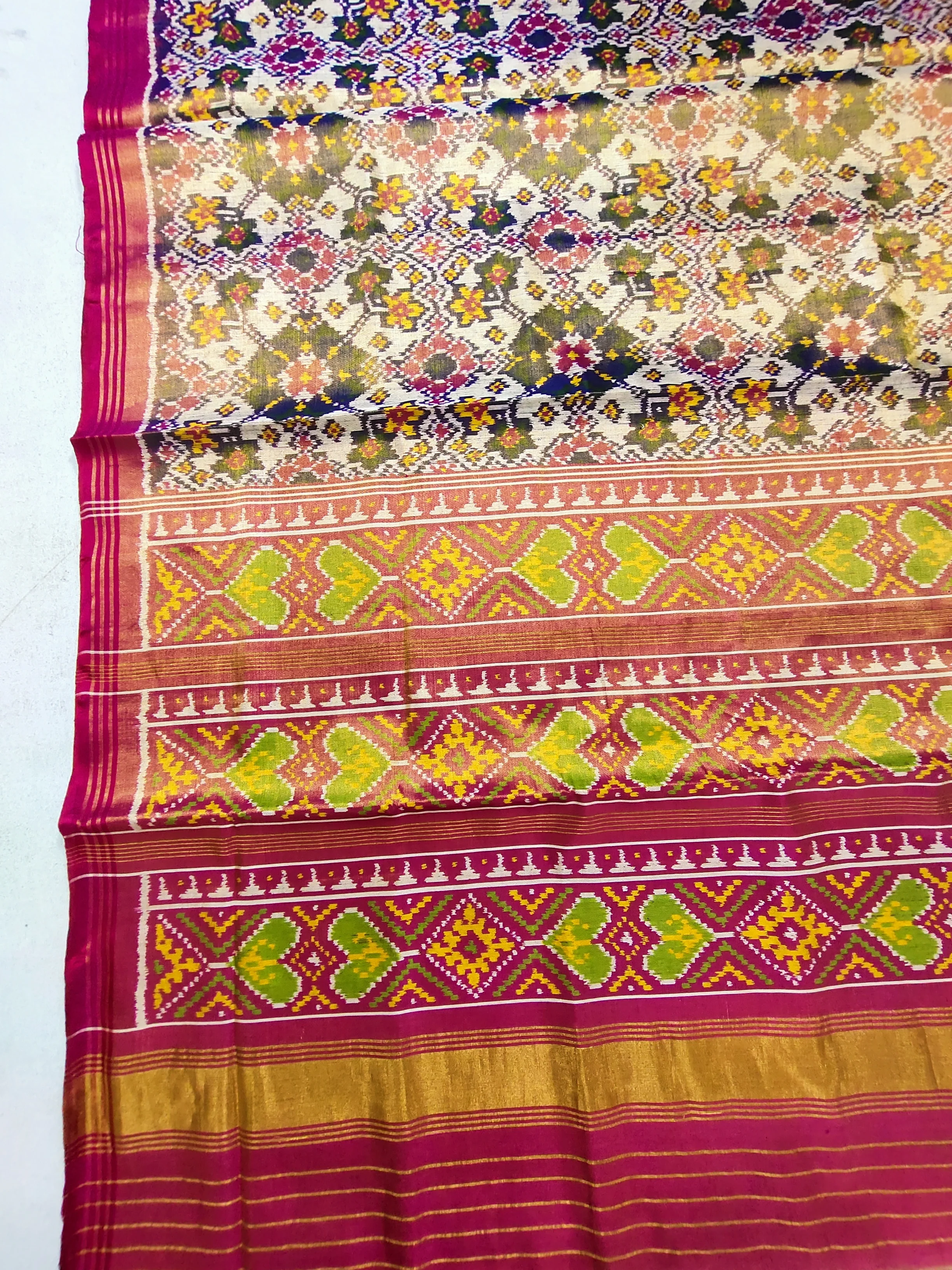
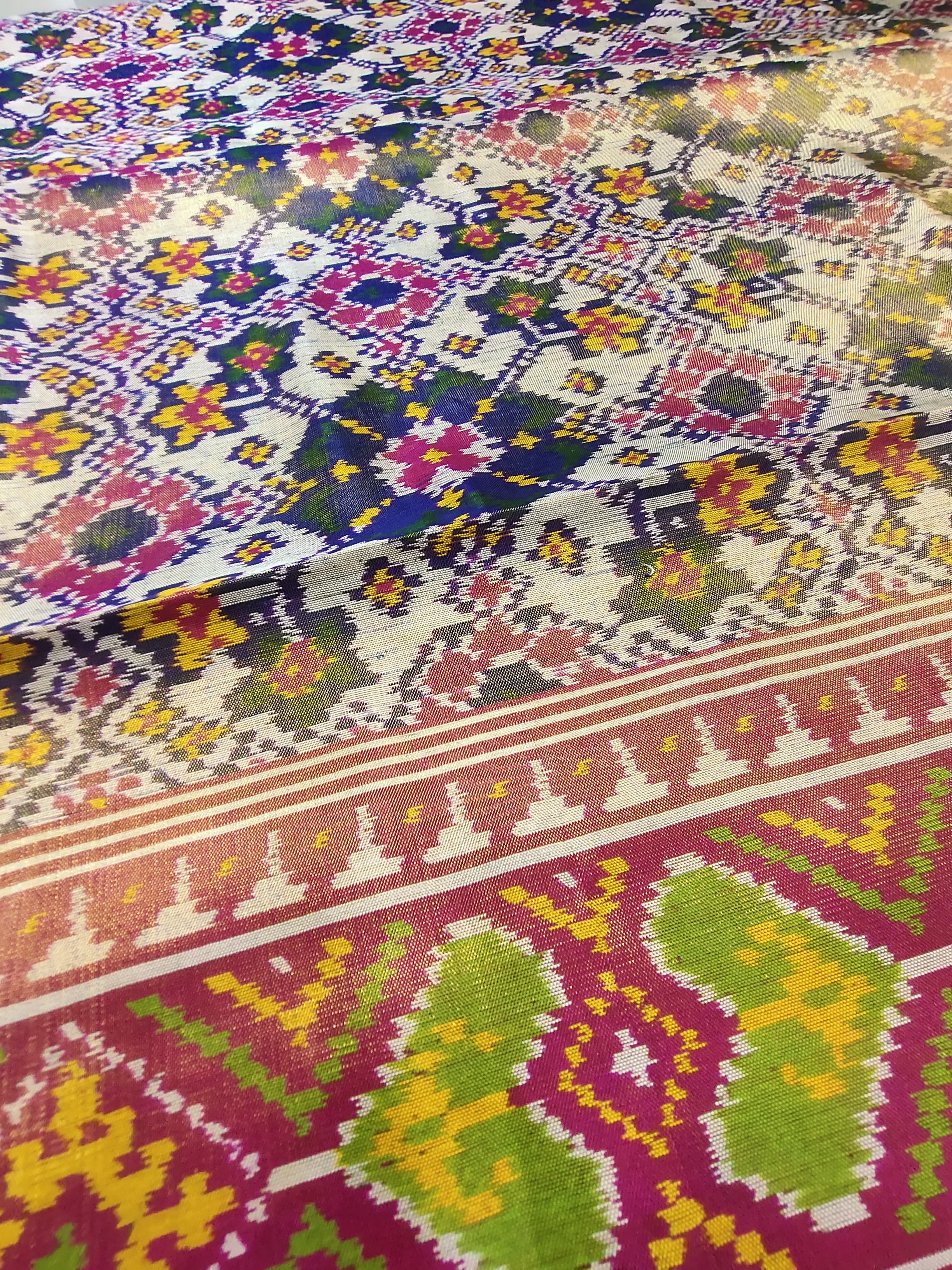
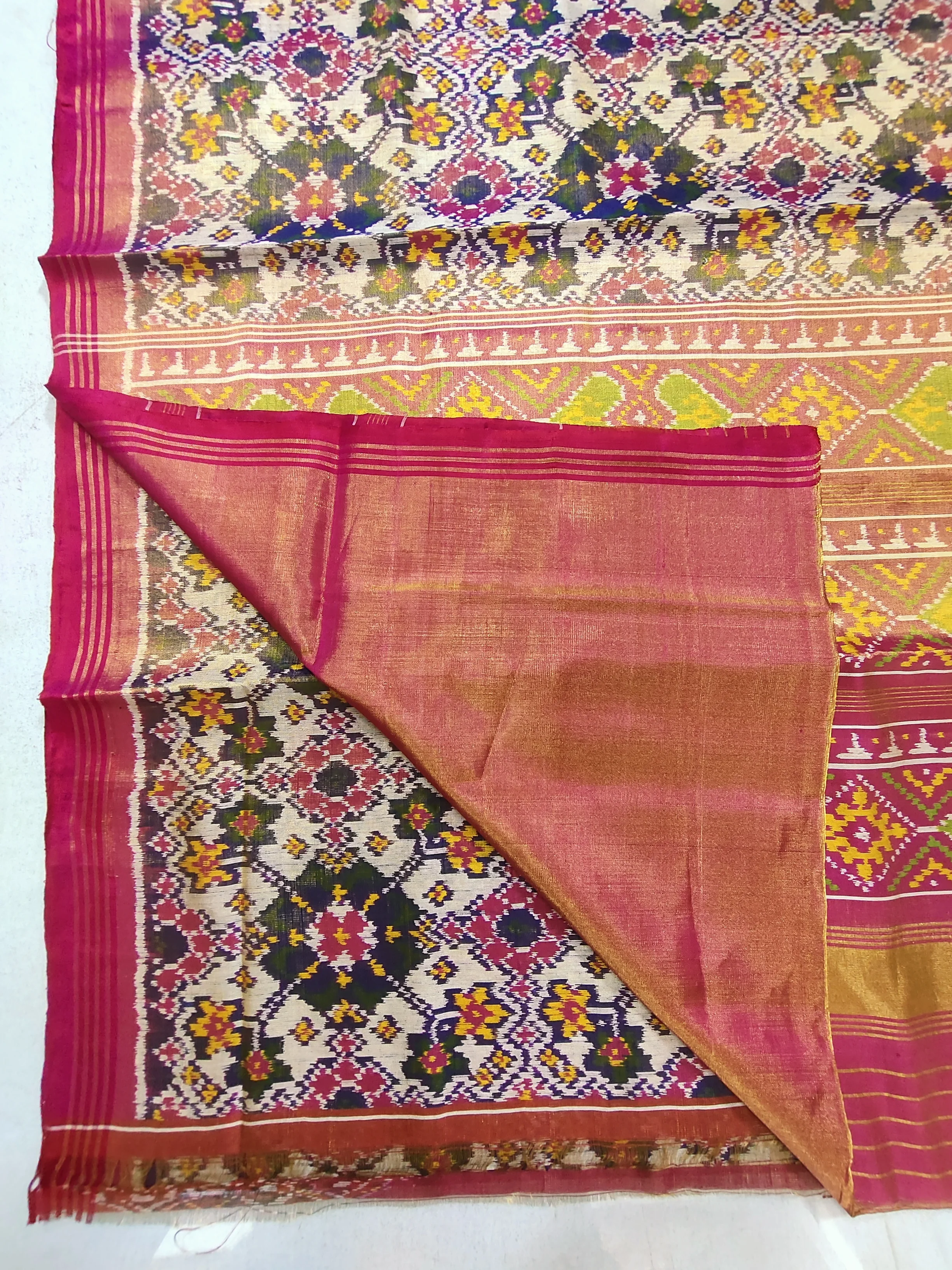
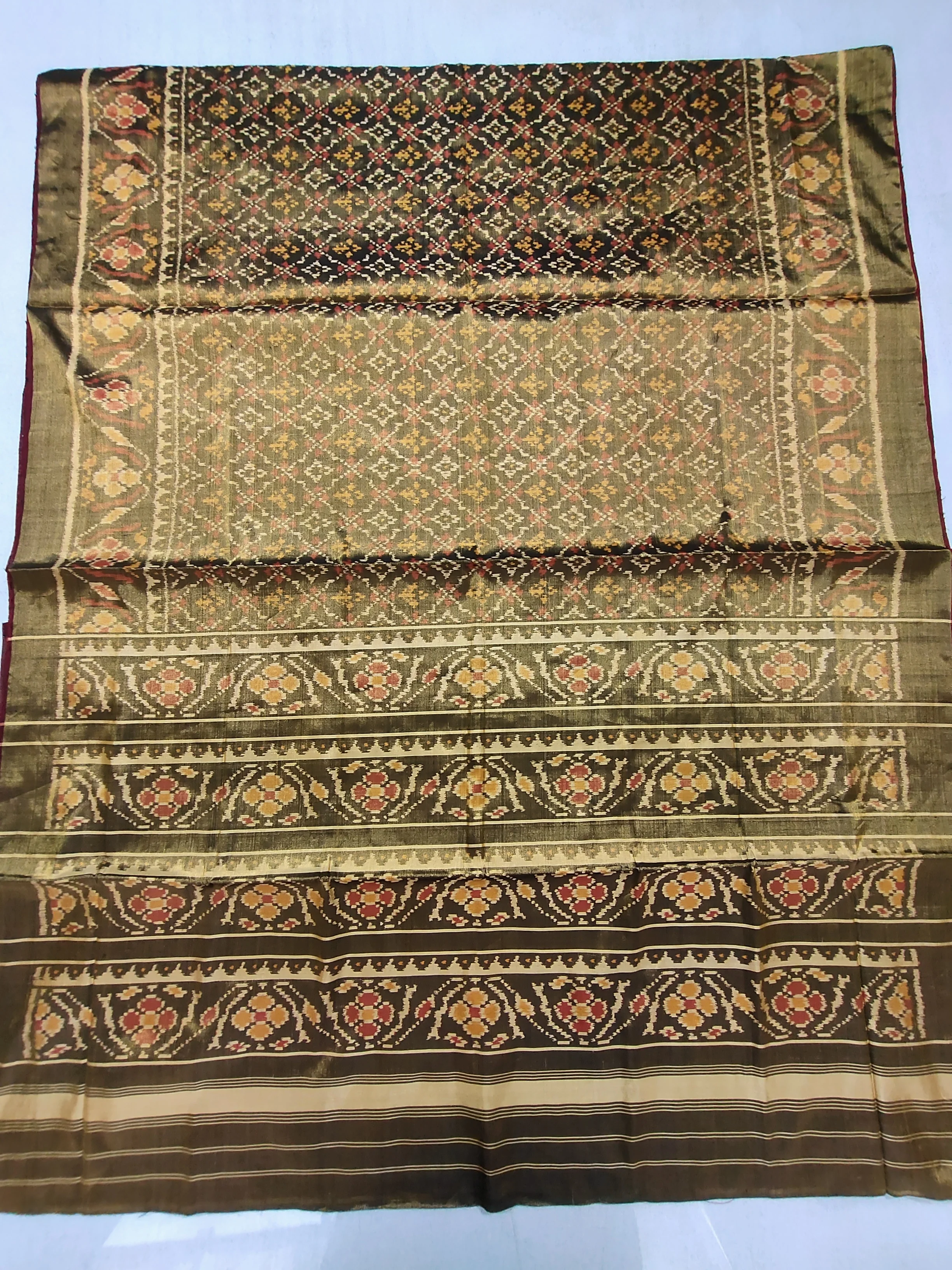
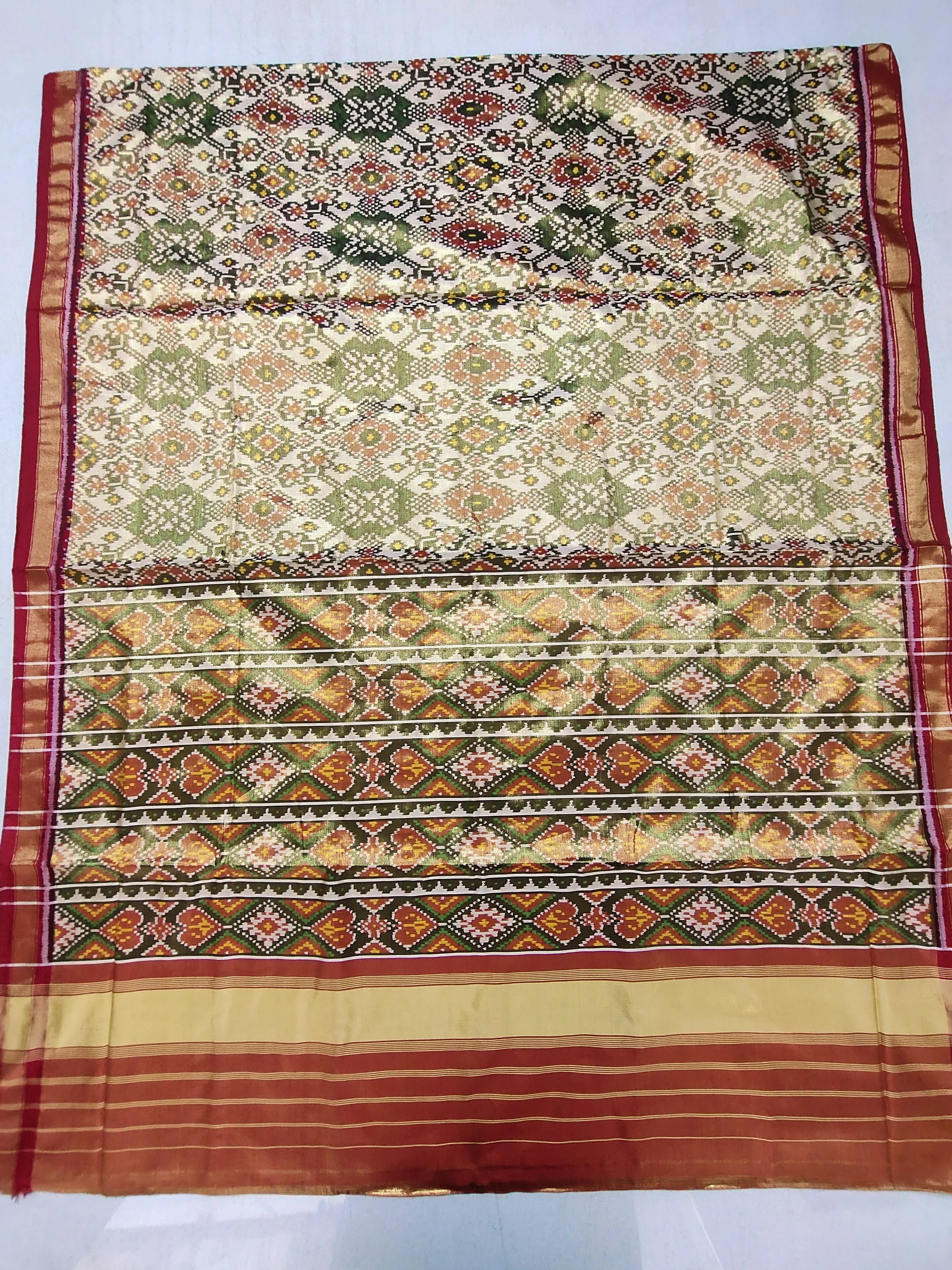
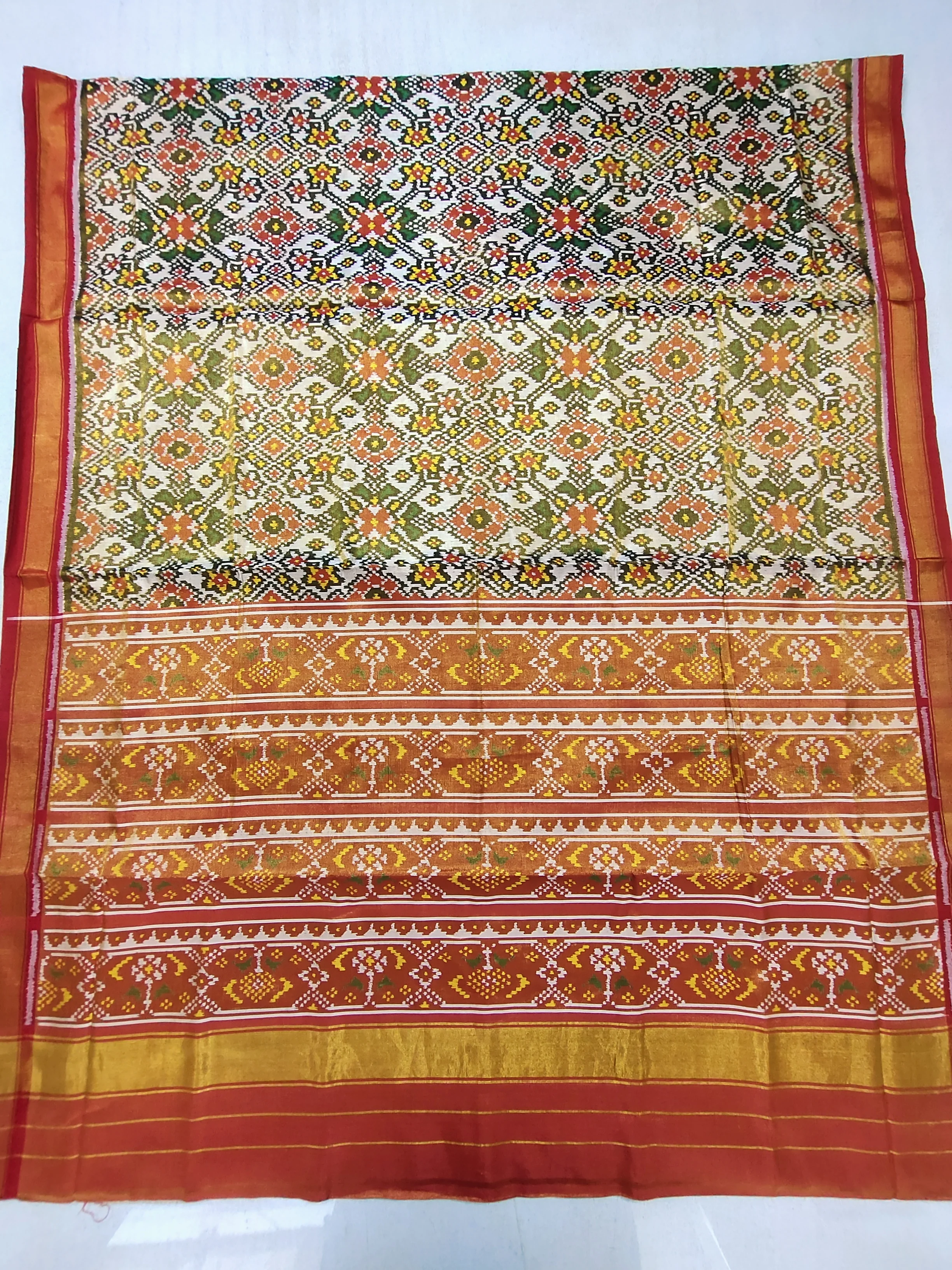
Tissue Patola Saree – Blue & White Base | Reddish Pink Selari Pallu | Navratan Motifs A refined Tissue Patola saree featuring a serene blue and white base, highlighted with traditional Navratan motifs and finished with a soft reddish pink Selari pallu. The composition reflects lightness in appearance with disciplined structure in design. Woven in silk tissue using the Patola technique, the fabric carries a subtle sheen while maintaining precise motif alignment. The combination of blue, white, and pink creates a balanced contrast without excess. The Selari pallu adds a defined traditional finish, while the Navratan motifs bring symbolic depth within a controlled layout. Light in feel. Strong in structure. Designed for global collectors who value understated luxury and authentic craftsmanship.

Our Pure Mulberry Silk is sourced from Bangalore, a region known for producing some of the finest silk in India. The process begins with high-quality mulberry silkworms that are raised on fresh mulberry leaves. After the cocoons are formed, the long, continuous silk filaments are carefully unwound and twisted into strong, smooth yarn.The silk mills in Bangalore follow a strict process—cleaning, reeling, twisting, and refining the yarn—to maintain a soft texture, natural shine, and long-lasting strength. This gives the fabric a premium, luxurious finish that stands apart from regular silk.Why We Use Luxury Mulberry SilkMade from top-grade mulberry cocoons Naturally soft, smooth, and durableLong, unbroken fibers for a clean, even weaveRich natural shine without extra chemicals Comfortable and breathable for all-day wearIdeal for premium sarees, dupattas, and designer outfits Our Commitment We use luxury-quality Mulberry Silk in our products to ensure each piece feels rich, looks elegant, and holds its quality for years.
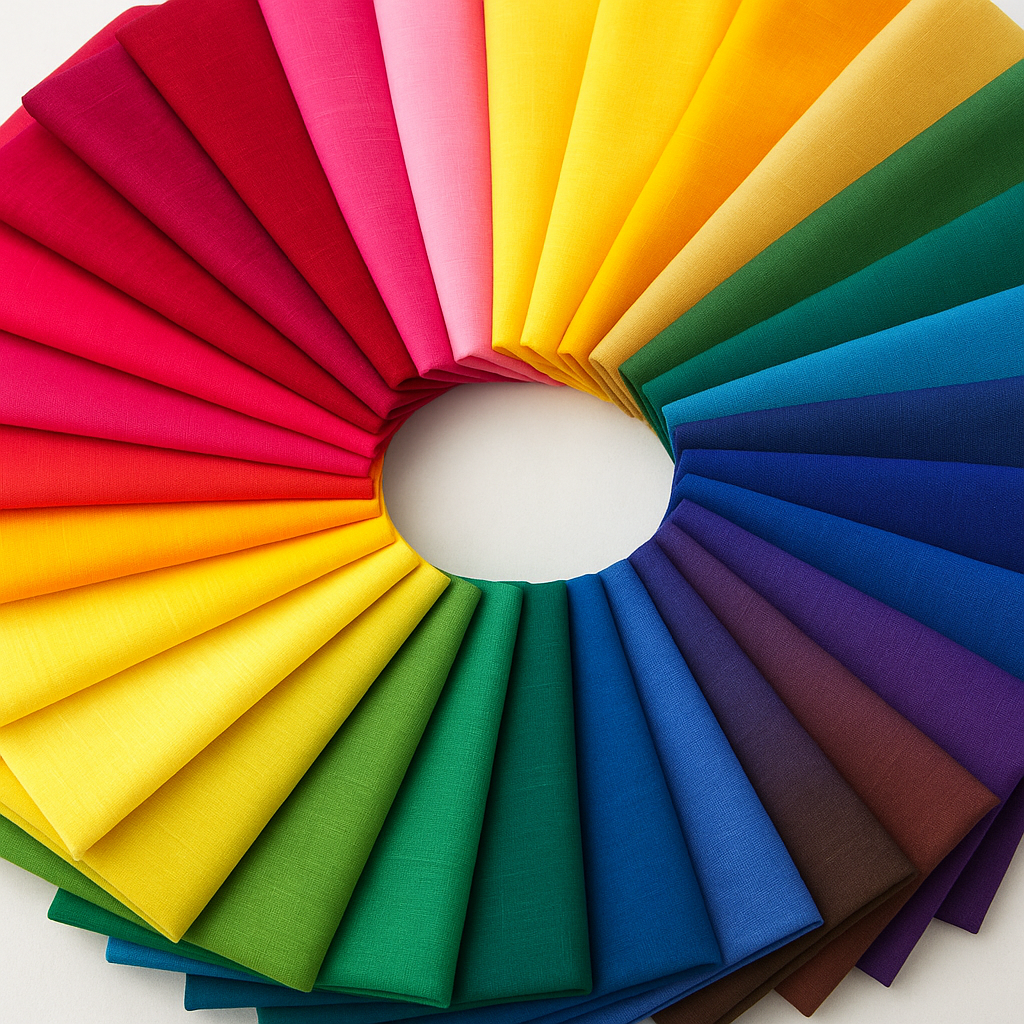
Naphthol Dyes ProcessThe Naphthol dye process is a two-step dyeing method used to produce strong, bright, long-lasting colours on cotton and other cellulose fabrics. The colour develops inside the fibre, making it more durable than basic direct dyes.How the Process Works Step 1: Naphthol ApplicationThe fabric is first treated with Naphthol base (a colourless solution).The fibres absorb this base and get prepared for colour development.Step 2: Diazotization (Coupling)The fabric is then passed through a Diazo solution (also called Fast Salt).When Naphthol and Diazo react, the actual colour forms inside the fibre.This two-step reaction creates Azo dye directly on the fabric.
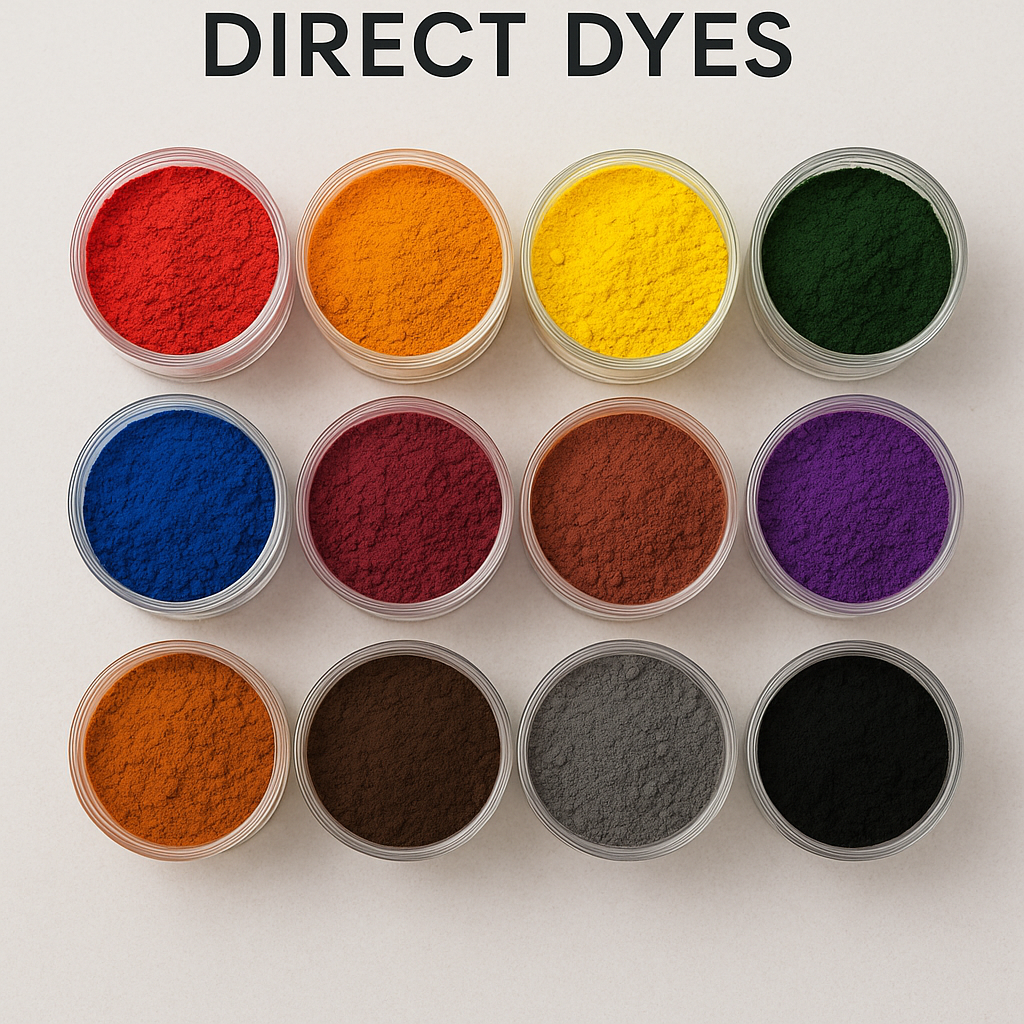
We use direct dyes on our silk fabrics to achieve bright, even colouring. These dyes dissolve easily in water and attach smoothly to the silk threads, giving a clean finish without harming the fibre.Direct dyeing helps us create clear, vibrant shades while keeping the fabric soft, flexible, and comfortable to wear. It also allows good colour penetration, so the saree or garment looks uniform and neat across the entire length.Why We Use Direct Dyes on Silk:Gives bright and sharp coloursQuick absorption on silk threadsSmooth, even finish across the fabricKeeps the silk soft and breathableIdeal for traditional and daily-wear coloursSafe for handloom productionThis method ensures consistent colour quality while maintaining the natural feel and fall of silk.
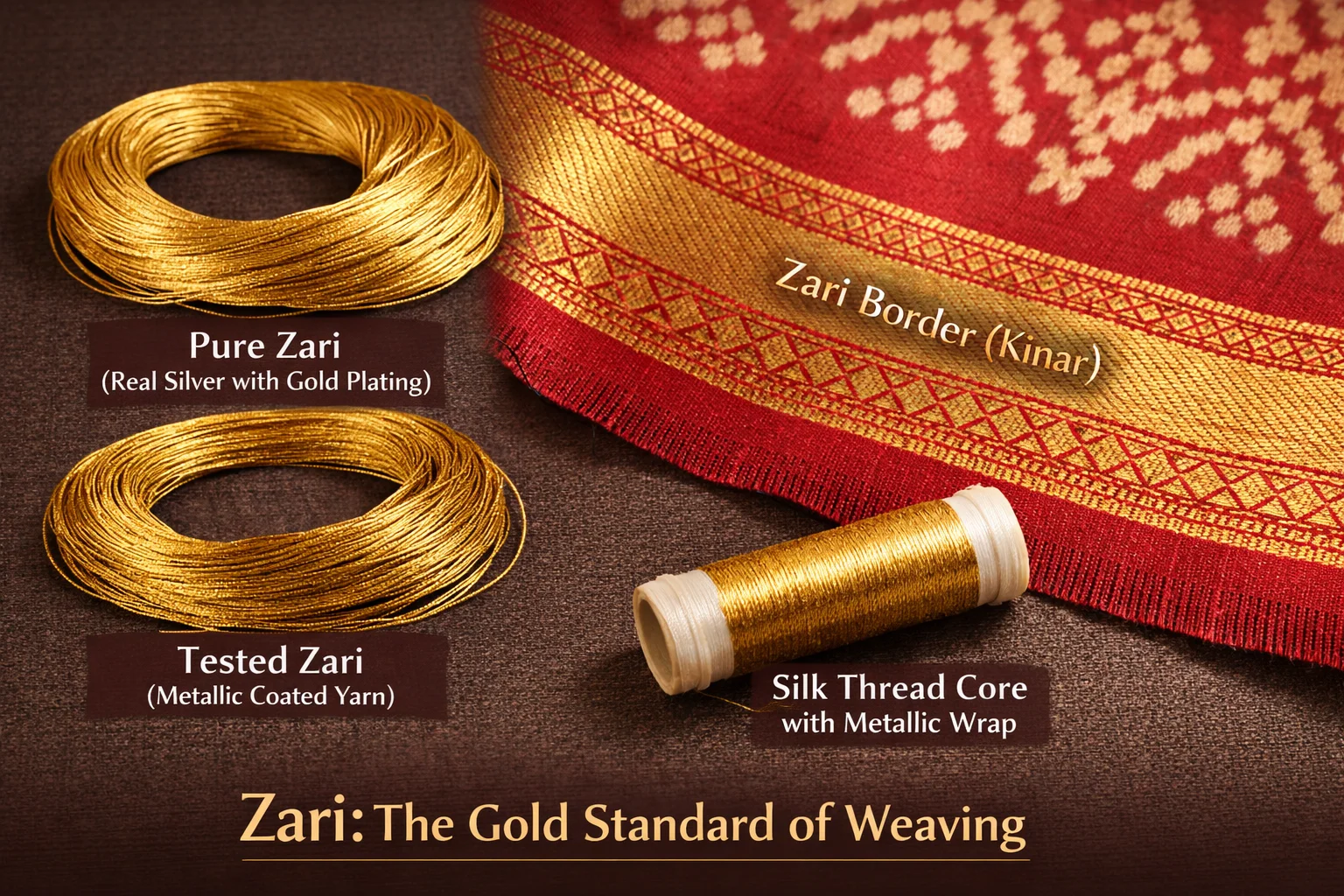
Traditional zari is a metallic thread woven into the border, adding strength, definition, and a refined gold finish without compromising the integrity of the Patola weave.