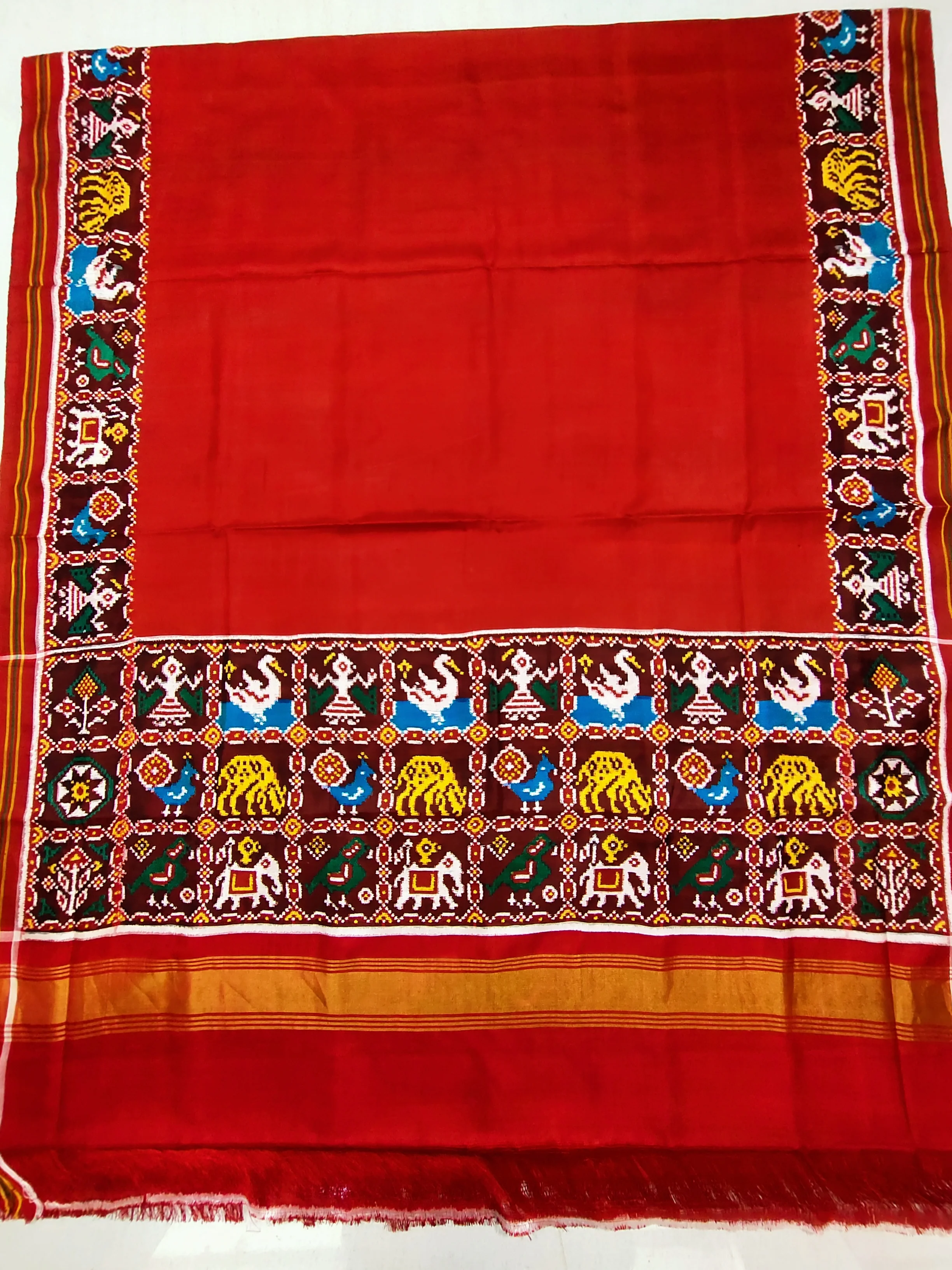
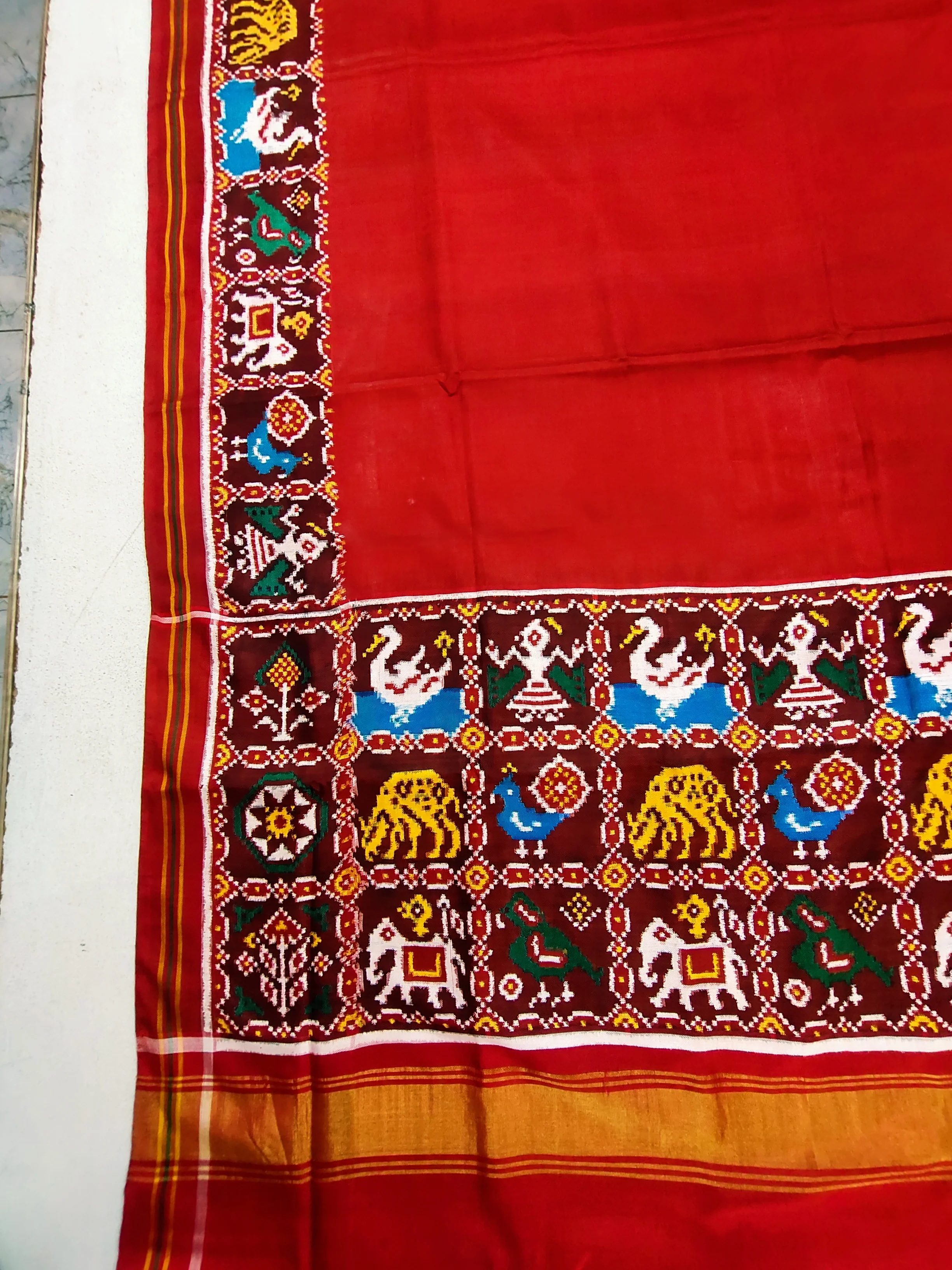
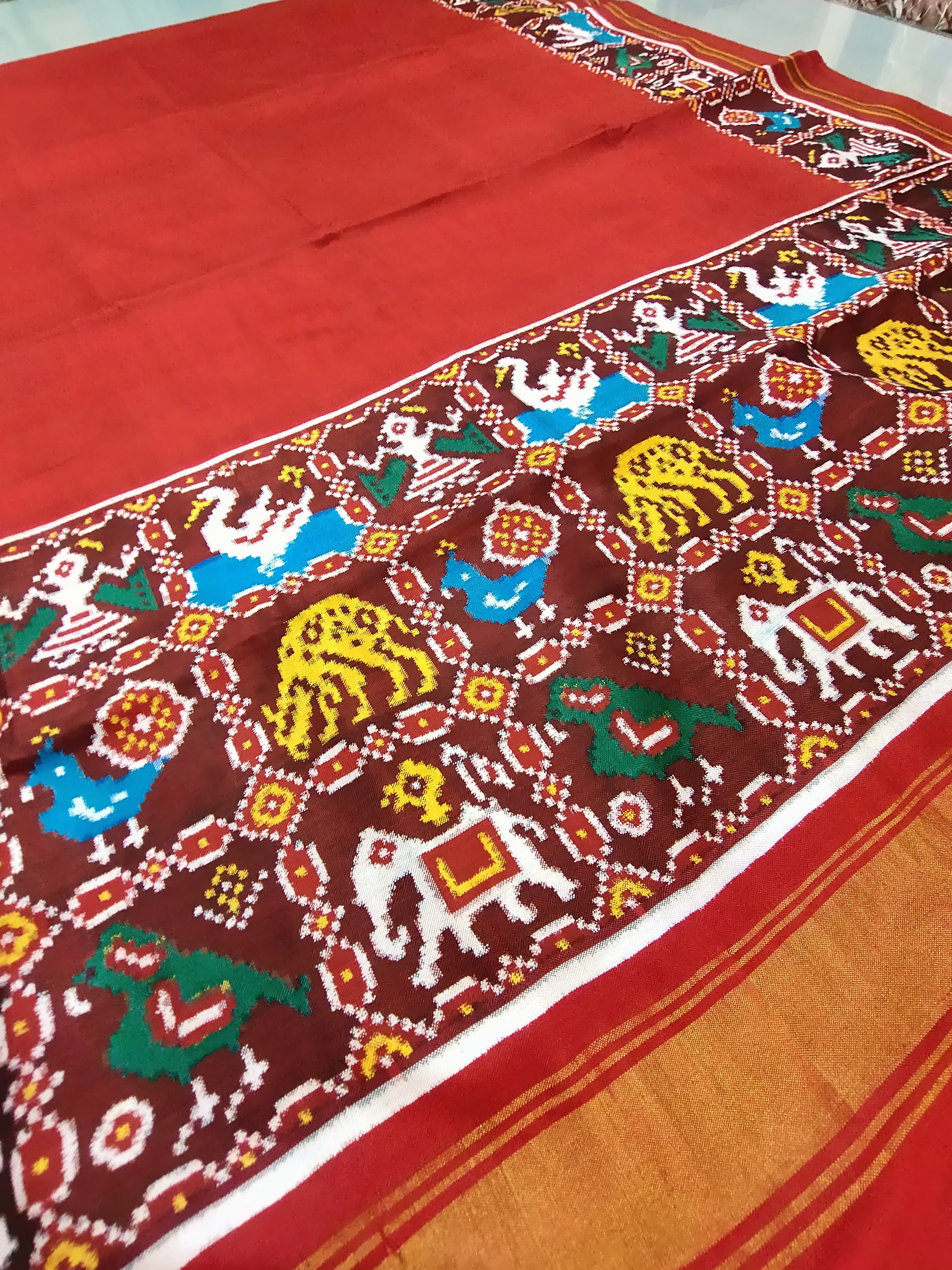
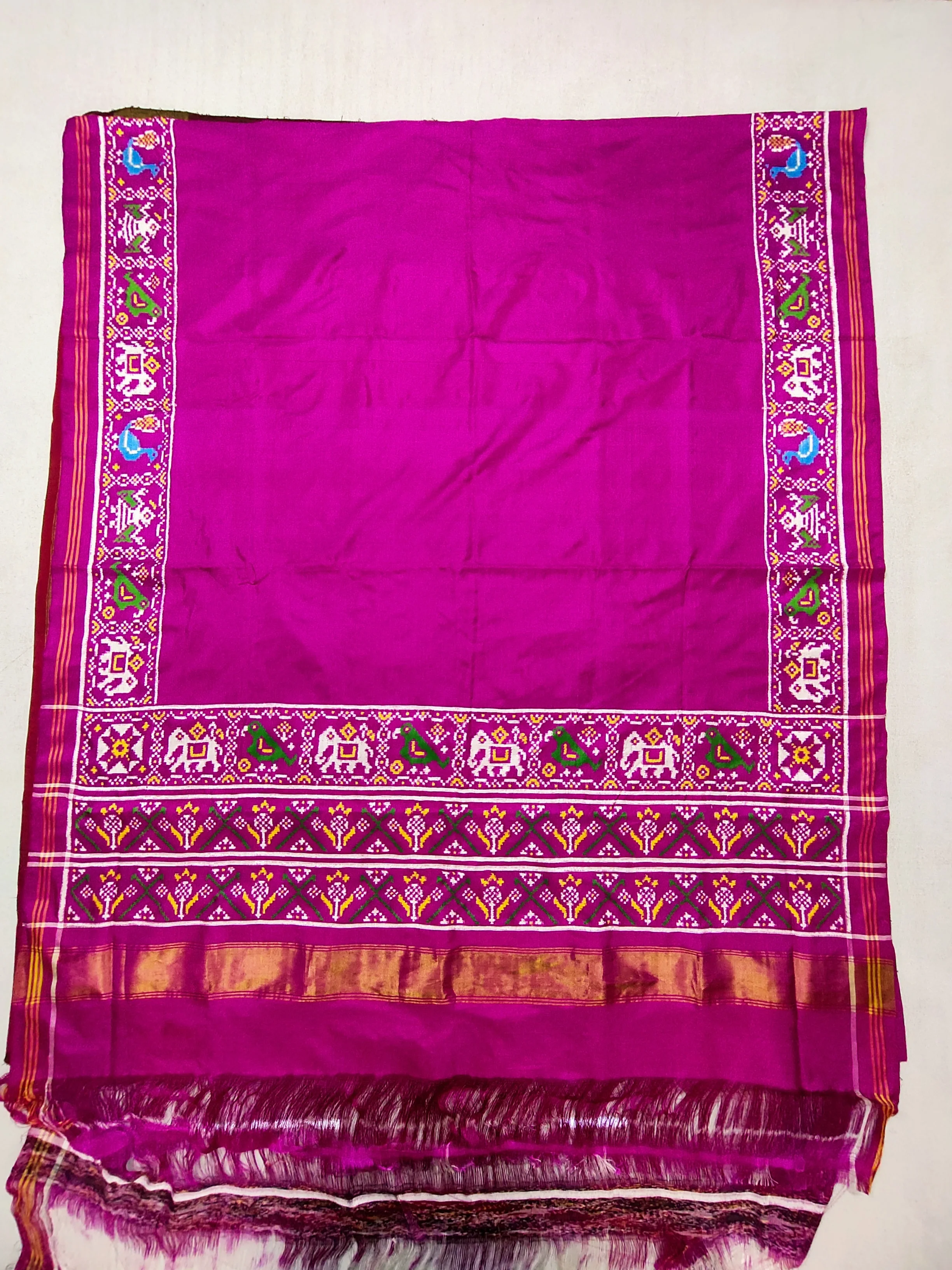
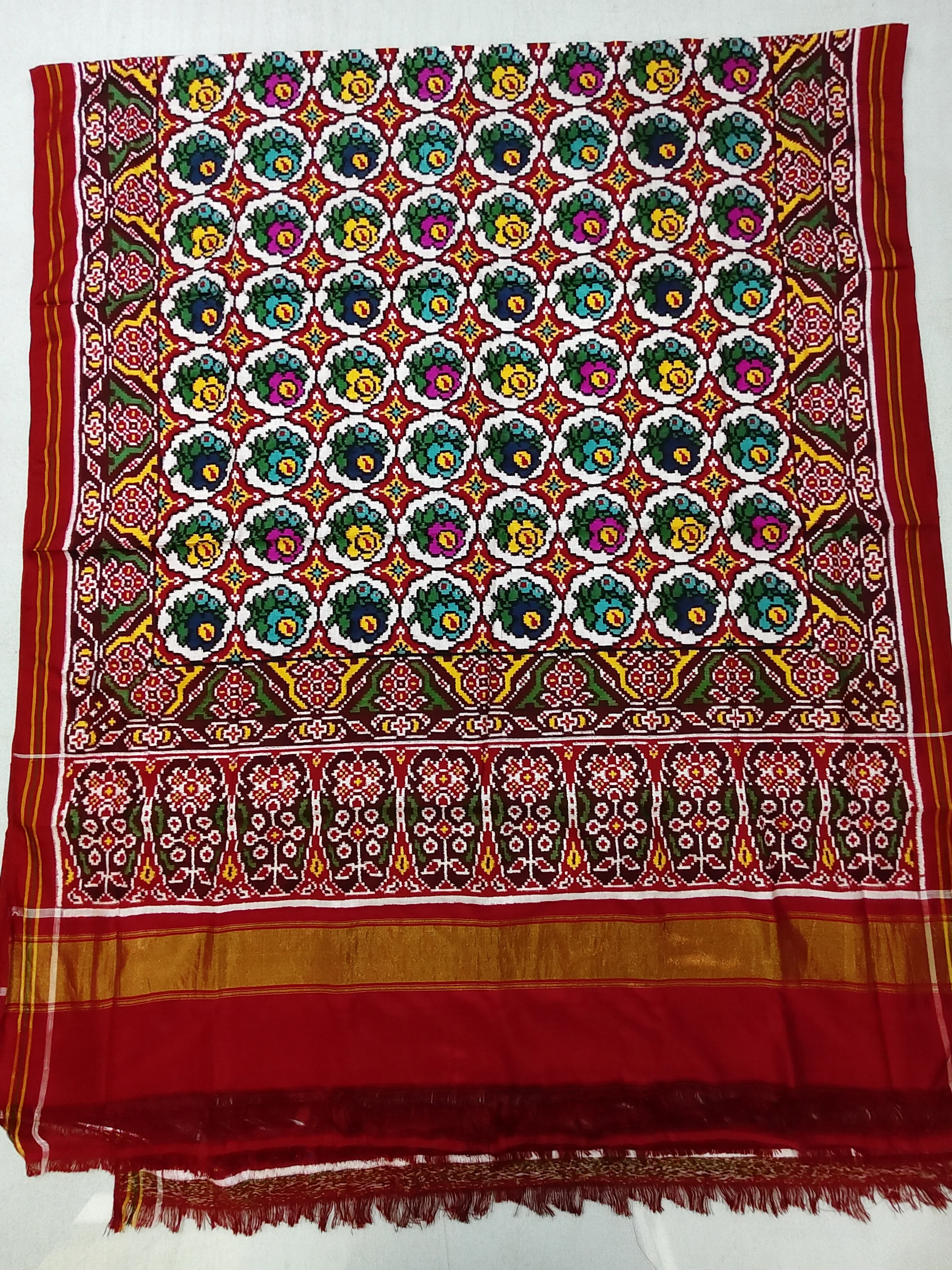
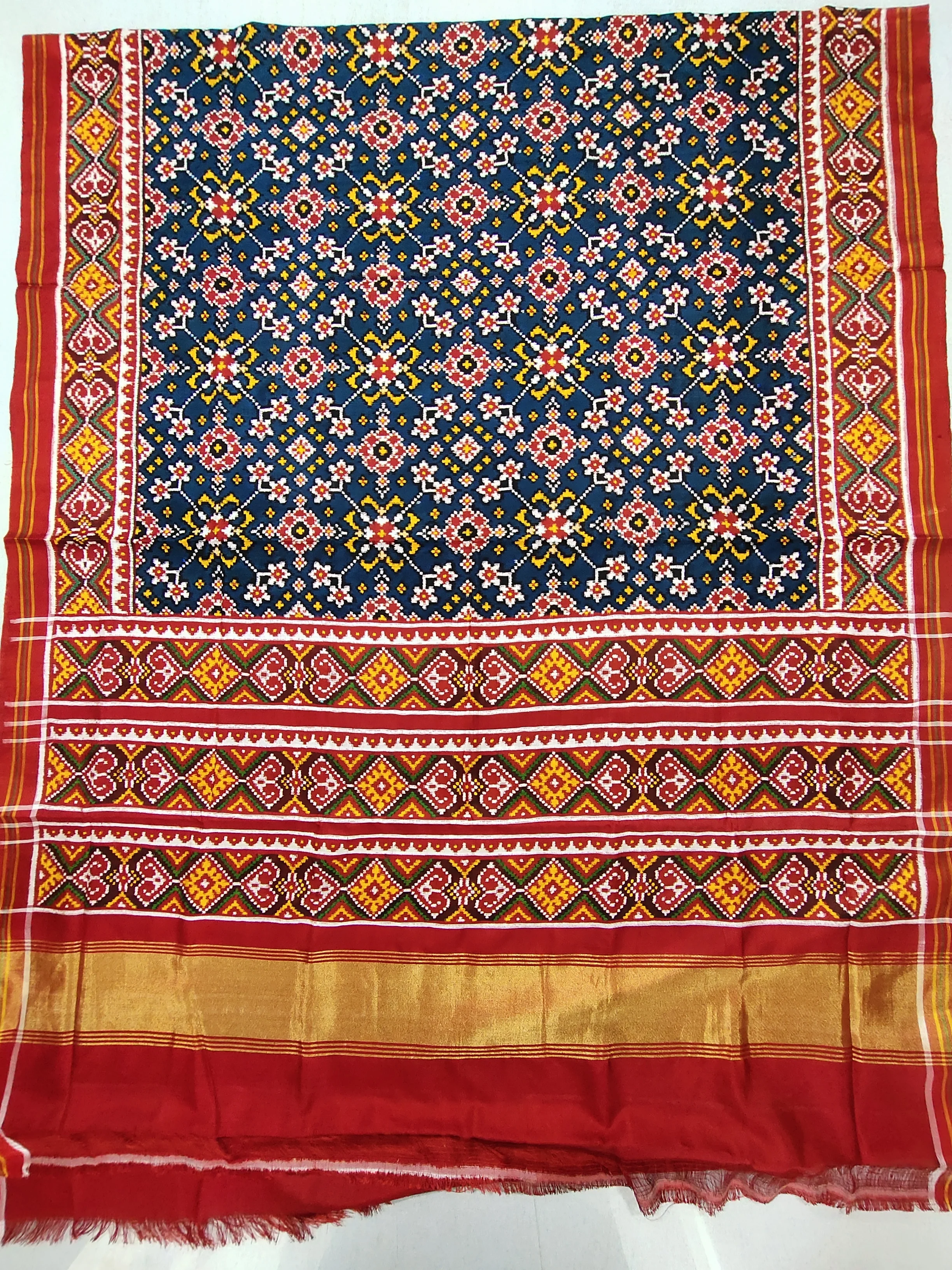
Double Ikat Patola Saree – Red Gala Border | Animal Motifs
A distinguished expression of Indian craftsmanship, this Double Ikat Patola saree features a bold Red Gala border complemented by traditional animal motifs, aligned with precision.
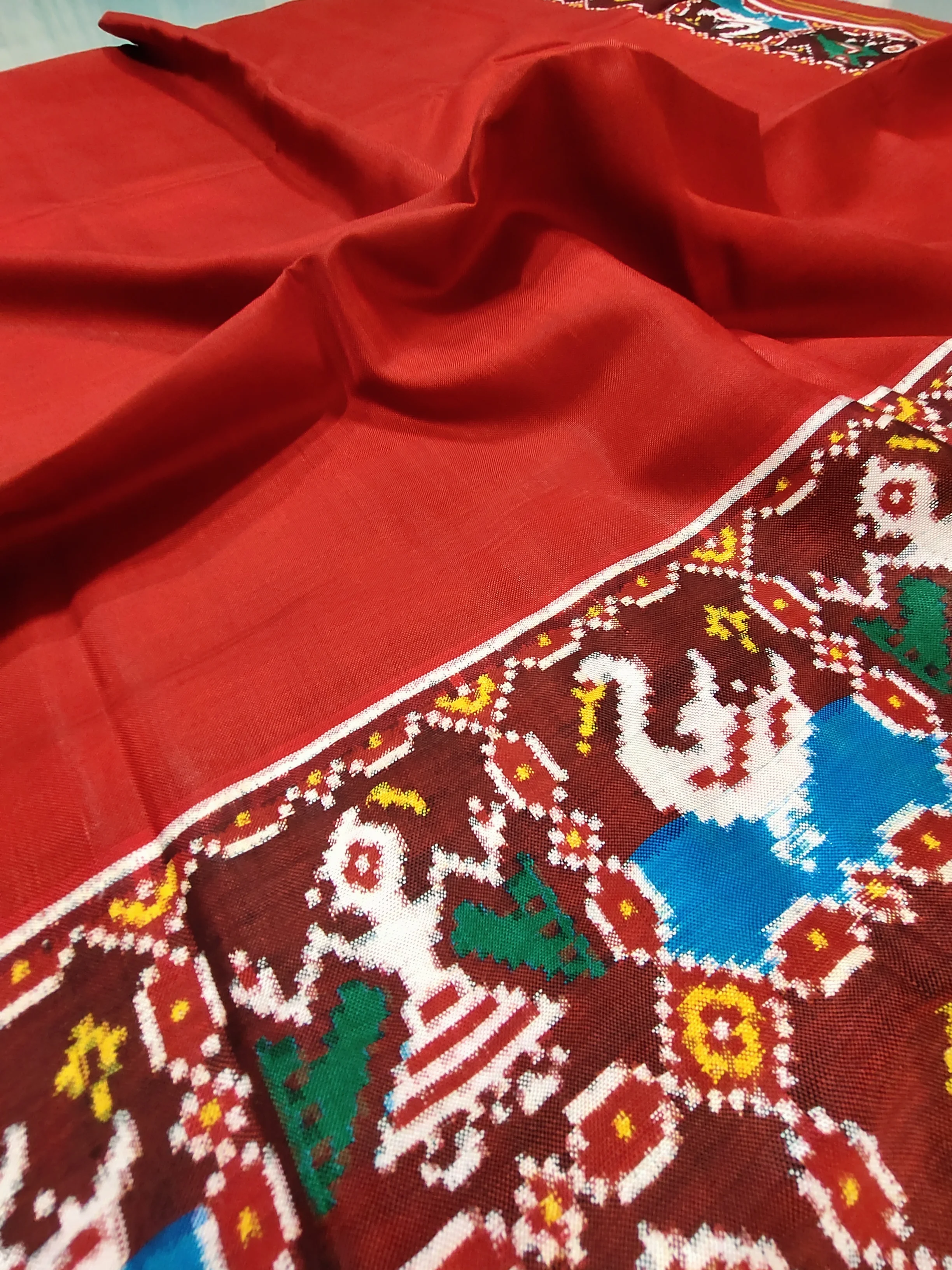
Each thread is resist-dyed on both warp and weft before weaving begins — a rare and exacting process where no correction is possible. The result is a textile defined by symmetry, depth, and permanence.
Crafted in pure silk, this saree carries the strength of tradition with a presence suited for a global stage.
Rooted in India.
Worn across the world.
Created for collectors who value authenticity over ornamentation.
Our Pure Mulberry Silk is sourced from Bangalore, a region known for producing some of the finest silk in India. The process begins with high-quality mulberry silkworms that are raised on fresh mulberry leaves. After the cocoons are formed, the long, continuous silk filaments are carefully unwound and twisted into strong, smooth yarn.The silk mills in Bangalore follow a strict process—cleaning, reeling, twisting, and refining the yarn—to maintain a soft texture, natural shine, and long-lasting strength. This gives the fabric a premium, luxurious finish that stands apart from regular silk.Why We Use Luxury Mulberry SilkMade from top-grade mulberry cocoons Naturally soft, smooth, and durableLong, unbroken fibers for a clean, even weaveRich natural shine without extra chemicals Comfortable and breathable for all-day wearIdeal for premium sarees, dupattas, and designer outfits Our Commitment We use luxury-quality Mulberry Silk in our products to ensure each piece feels rich, looks elegant, and holds its quality for years.
Naphthol Dyes ProcessThe Naphthol dye process is a two-step dyeing method used to produce strong, bright, long-lasting colours on cotton and other cellulose fabrics. The colour develops inside the fibre, making it more durable than basic direct dyes.How the Process Works Step 1: Naphthol ApplicationThe fabric is first treated with Naphthol base (a colourless solution).The fibres absorb this base and get prepared for colour development.Step 2: Diazotization (Coupling)The fabric is then passed through a Diazo solution (also called Fast Salt).When Naphthol and Diazo react, the actual colour forms inside the fibre.This two-step reaction creates Azo dye directly on the fabric.